Menu

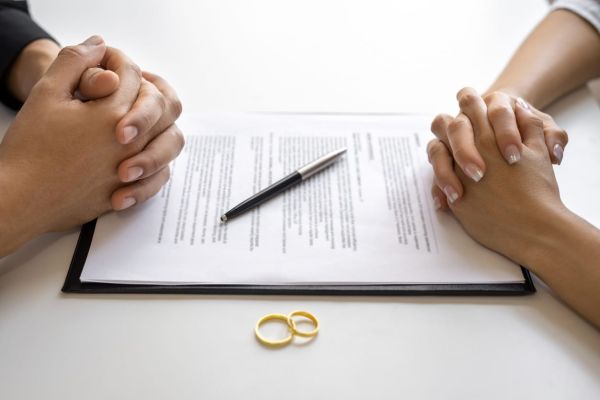
Divorce raises many questions, many of which center on the uncertainty of your financial future. One of the most common questions is, how long does spousal support last? California uses a structured formula to calculate duration, with the underlying goal of fairness and eventual financial independence for each spouse.
There are several types of spousal support that California courts will award in a divorce. The goal is to create a customized plan that addresses the needs of each divorcing couple. How long spousal support lasts will depend on the type of support and several other contributing factors.
The court will evaluate the circumstances, considering factors such as the length of the marriage, spousal financial contributions, and the future earning ability of each spouse.
Temporary support is awarded by the court to provide support during the divorce proceedings. The goal is to maintain the status quo for both parties.
A standardized formula is used to calculate a guideline or suggested amount. While the court will generally follow the suggested guideline amount, the judge does have discretion to deviate.
The temporary support order will terminate upon entry of the final divorce judgment or the parties' agreement to a specific end date prior to filing.
Long-term or permanent support is awarded in the divorce proceeding and begins after the divorce is finalized. Despite the name implying it lasts forever, it may not. California family courts consider several factors in determining the amount and duration of support.
The goal of rehabilitative support is to encourage the supported spouse to become financially independent. They may require financial support to complete a degree or training to pursue a profession. If they had a career before the marriage, they may need support to update skills that have become outdated during the marriage.
The support typically covers living and educational expenses. The duration of the support is calculated based on the estimated duration of the rehabilitation. The court considers the reasonableness of the plan and the likely result.
The spouse receiving support must make reasonable efforts to show progress towards their goal. Failure to perform their agreed-upon rehabilitation activities can result in the court terminating support.
A court may award reimbursement support if one spouse financially supported the other’s professional growth during the marriage. A common example of this is one spouse working while the other attains a medical, legal, or business degree.
The goal is to repay them for their financial investment in the other’s educational pursuits. The assumption is that the degree-earning spouse will have a higher earning potential in the future. The
A less common type of support is a lump-sum payment. This type of support isn’t an official type of support under California law. It is more common in settlement agreements between the parties than in court rulings. The advantage of this type of support is that it cannot be modified later. However, the downside is that the paying spouse must have sufficient financial resources to make the large payment.
California law defines a short-term marriage as one that lasts less than ten years. The general guideline is that support will last half the length of the marriage. This may change if the court finds sufficient grounds for adjustment. Common reasons for deviating from the guideline could be age, health, marital contribution, or earning capacity.
Marriages that are longer than 10 years are considered long-term under California law. There is a common misconception about the “10-year rule” in divorce law. That you are entitled to guaranteed indefinite spousal support solely because the marriage exceeded 10 years. This is not the case.
While the court may not set a definite end date, this isn’t a guaranteed check for the rest of your life. Instead, either spouse can petition the court to end or modify the support.
Several events may trigger the end of the support. If either spouse dies, the support immediately ends upon their death. The termination is automatic and doesn’t require additional court action.
If the spouse receiving the spousal support gets legally remarried, the support automatically ends on the date of the marriage. The paying spouse doesn’t need to be aware of the marriage for the termination to take effect. Courts will generally strictly enforce this rule unless the parties' divorce agreement specifically outlines that payments continue despite remarriage.
Some divorce judgments or support orders have a set end date. Support will automatically terminate on that date. The court doesn’t typically assign a specific end date. It’s more common with negotiated settlements.
Either spouse can seek to modify the support judgment after the initial order. To be successful when seeking a modification, there must be a significant change in circumstances. It may be job loss, retirement, an increase in income, or the supported spouse becoming self-sufficient.
Sometimes a supported spouse may choose to cohabitate with their new partner instead of legally marrying them. The supporting spouse can request a modification, as the cohabitation creates an assumption that the supported spouse’s needs have decreased. The paying spouse can request a reduction. The supported spouse must rebut this by demonstrating that they still require support.
Spousal support is supposed to create financial balance during and after divorce. The marriage length and each spouse’s ability to achieve financial independence factor into when support ends. These decisions can have lasting consequences if not handled carefully. ADZ Law represents clients in spousal support matters with a practical, results-driven approach.
If spousal support is affecting your long-term financial planning, contact ADZ Law today for a consultation. Our family law attorneys work with clients throughout San Mateo to pursue fair, legally sound outcomes.
Our Firm Speaks
© 2026 ADZ Law, LLP
| View Our Disclaimer | Privacy Policy
Law Firm Website Design by The Modern Firm